
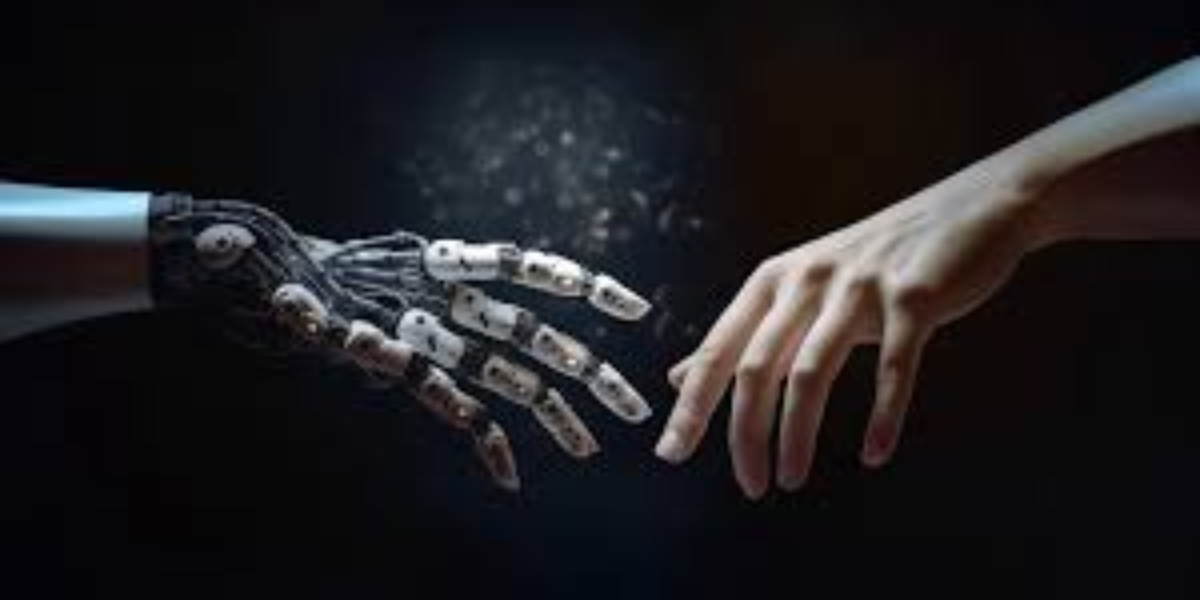
Every few weeks, a new headline appears. “AI will take all our jobs.” “AI could destroy humanity.” “Experts warn AI poses existential risk.” It is hard to know what to believe — especially when the people building AI themselves sometimes disagree publicly about how worried we should all be.
So let us cut through the noise. Is AI Dangerous for Humans
Is AI dangerous for humans? The honest answer is: it depends entirely on how it is built, who controls it, and what it is used for. Some risks are real and already happening. Others are overstated or misunderstood. And a few genuine long-term concerns deserve serious attention without panic.
LEARN MORE : https://deeplearndaily.blog/2026/06/12/benefits-of-artificial-intelligence/
Understanding the Question: What Kind of “Danger” Are We Talking About?
When people ask “is AI dangerous for humans,” they are usually thinking about very different things. Some worry about losing their job to automation. Others fear surveillance and loss of privacy. Some think about AI being used as a weapon. A smaller group worries about highly advanced AI systems eventually operating beyond human control. Is AI Dangerous for Humans
These are all separate conversations, and they deserve separate answers.
| Type of Concern | How Real Is It Today? |
| Job displacement | Already happening in some sectors |
| Bias and discrimination | A documented, current problem |
| Privacy invasion | Actively occurring worldwide |
| Misinformation and deepfakes | Growing rapidly |
| Autonomous weapons | Being developed now |
| Loss of human control (AGI) | Theoretical, but taken seriously |
Let us go through each one properly.
Job Displacement and Economic Disruption
This is probably the most immediate concern for most people — and it is not imaginary. Is AI Dangerous for Humans
AI and automation are already changing the job market. Roles that involve repetitive, rule-based tasks are the most vulnerable. Data entry, basic customer service, simple document processing, certain types of transportation — these are areas where AI systems are replacing human labor at a measurable pace.
A 2023 report by Goldman Sachs estimated that AI could automate tasks equivalent to roughly 300 million full-time jobs globally. That does not mean 300 million people will suddenly be unemployed — but it does mean significant disruption across many industries. Is AI Dangerous for Humans
Bias, Discrimination, and Unfair Outcomes

AI systems learn from data. And data reflects the world as it has been — including its inequalities, prejudices, and historical injustices. Is AI Dangerous for Humans
When an AI hiring tool is trained on past hiring decisions made by biased humans, it learns to replicate those biases. When a facial recognition system is trained primarily on lighter-skinned faces, it performs poorly on darker-skinned faces — with serious consequences if that system is used by law enforcement.
Privacy Erosion and Mass Surveillance
AI has dramatically expanded the capacity for surveillance — by governments, corporations, and bad actors alike.
Facial recognition technology can now identify individuals in crowds in real time. AI-powered data brokers compile detailed profiles from your online activity, purchases, location data, and social connections. Governments in several countries use AI surveillance systems to monitor citizens at a scale that was not technically possible a decade ago. Is AI Dangerous for Humans
In China, AI-powered social credit systems and facial recognition networks represent one extreme of this trend. But even in democratic countries, the accumulation of personal data by tech companies — and its analysis by AI — raises serious questions about consent, control, and the power imbalance between individuals and institutions. Is AI Dangerous for Humans
Misinformation, Deepfakes, and Manipulation

Generative AI has made it cheaper and easier than ever to create convincing false content — fake images, fake videos, fake audio, fake articles. Is AI Dangerous for Humans
Deepfake videos can put words in the mouths of politicians, celebrities, or private individuals. AI-generated text can produce thousands of fake news articles or social media posts at a scale no human team could match. Voice cloning technology can impersonate someone’s voice convincingly enough to fool family members.
Autonomous Weapons and AI in Warfare
Military applications of AI represent one of the most serious areas of concern among researchers and ethicists.
Autonomous weapons — drones or other systems capable of identifying and engaging targets without direct human control — are already being developed by multiple nations. The fundamental problem is accountability: if an autonomous weapon makes a fatal mistake, who is responsible? Is AI Dangerous for Humans
Beyond individual accountability, there is a broader strategic concern. AI-enabled warfare could lower the threshold for conflict, enable faster escalation, and create new categories of risk that existing international law was never designed to address.
Overreliance and Deskilling

A quieter but real concern is what happens when humans become too dependent on AI systems and stop developing or maintaining their own skills and judgment.
If doctors consistently defer to AI diagnostic tools without critically evaluating the output, their own diagnostic ability may deteriorate. If students use AI to write all their essays, they may not develop the thinking and communication skills those essays were meant to build. If navigation apps mean people never learn to read a map or develop spatial awareness, those skills quietly disappear. Is AI Dangerous for Humans
Overreliance is a risk not because AI will suddenly fail — though systems do fail — but because human judgment and skill matter in ways that go beyond efficiency. They are part of what makes people capable, adaptable, and resilient.
What Is Overstated or Misunderstood
Fairness requires acknowledging where AI danger is often exaggerated.
The “sentient AI taking over” narrative depicted in Hollywood films bears little resemblance to how current AI systems actually work. Today’s AI — including the most advanced language models — does not have consciousness, desires, or survival instincts. It does not secretly plot against its users.
READ MORE : https://deeplearndaily.blog/2026/06/11/how-does-chatgpt/
The idea that all jobs will disappear is also overstated. History consistently shows that technology eliminates certain roles while creating others. The challenge is managing the transition fairly — not that work will cease to exist.
What Makes AI Safer: The Human Factors

The question “is AI dangerous for humans” cannot be answered by looking at AI alone. The answer depends heavily on human choices: Is AI Dangerous for Humans
Regulation and governance: Countries and international bodies setting clear rules about how AI can be used, especially in high-stakes domains like criminal justice, healthcare, and national security.
Transparency and explainability: Requiring that AI systems used in important decisions be explainable — that users and those affected can understand how a decision was reached.
AI Danger Separating Myth from Reality
| Common Fear | Reality Check |
| AI will take all jobs | Some jobs at risk; new ones emerging; transition matters |
| AI is always biased | Bias is a real problem but can be addressed with careful design |
| AI will become conscious and rebel | No current evidence this is imminent; not how today’s AI works |
| Deepfakes are unstoppable | Detection tools are improving; media literacy helps |
| AI surveillance is inevitable | Strong regulation can and does limit it |
| AI safety research is pointless | Most AI researchers consider it genuinely important |
FAQS
Is AI dangerous for humans right now?
Some AI risks are real and present right now — including job displacement in certain sectors, algorithmic bias producing unfair outcomes, privacy erosion through data collection, and AI-enabled misinformation. These deserve serious attention. The more dramatic risks associated with highly advanced AI are longer-term concerns, not immediate crises.
Can AI take over the world?
Current AI systems have no consciousness, desires, or ability to “want” anything. They cannot independently decide to take over the world. The long-term concern among researchers is subtler — that highly capable AI systems optimizing for the wrong objectives could cause serious harm. This is why AI safety research matters, but it is not the robot uprising depicted in films.
Is AI a threat to jobs?
Yes, in specific sectors and roles — particularly those involving repetitive, rule-based tasks. The scale and speed of this disruption is a legitimate concern. However, new roles are also emerging around AI development, management, and oversight. The key challenge is ensuring the transition is managed fairly, with investment in retraining and education.
How does AI threaten privacy?
AI dramatically expands the capacity to collect, analyze, and act on personal data. Facial recognition, behavioral tracking, data profiling, and predictive modeling all raise serious privacy concerns. Strong data protection laws and individual awareness of digital rights are important safeguards.
Are deepfakes dangerous?
Yes, and increasingly so. AI-generated fake videos, images, and audio can be used to spread misinformation, manipulate public opinion, commit fraud, and harm individuals’ reputations. Detection technology and media literacy are both important responses.
What is AI alignment and why does it matter?
AI alignment is the challenge of ensuring that AI systems pursue goals that are genuinely beneficial to humans, rather than optimizing for their programmed objective in ways that cause unintended harm. It matters because as AI systems become more capable, the consequences of misaligned objectives become more serious. Leading AI researchers consider it one of the most important long-term challenges in the field.
Can AI be made safe?
Yes — through careful design, diverse development teams, strong regulation, transparency requirements, human oversight, and dedicated safety research. Safety is not guaranteed automatically, but it is achievable with deliberate effort. The fact that risks exist does not mean they cannot be managed.
Should people be afraid of AI?
Fear is not the most productive response. Informed awareness is. Understanding what AI can and cannot do, what the real risks are (and are not), and how to use AI tools critically and responsibly puts you in a far better position than either dismissing all concerns or accepting every alarming headline at face value.
Conclusion
Is AI dangerous for humans? The truthful answer is: yes, in specific ways — and no, not in the apocalyptic ways that headlines sometimes suggest. Is AI Dangerous for Humans
The real dangers are mostly human in nature. They come from deploying AI carelessly, from training it on biased data, from using it to surveil and manipulate, from rushing it into high-stakes decisions without adequate oversight, and from failing to manage the economic disruption it causes.
